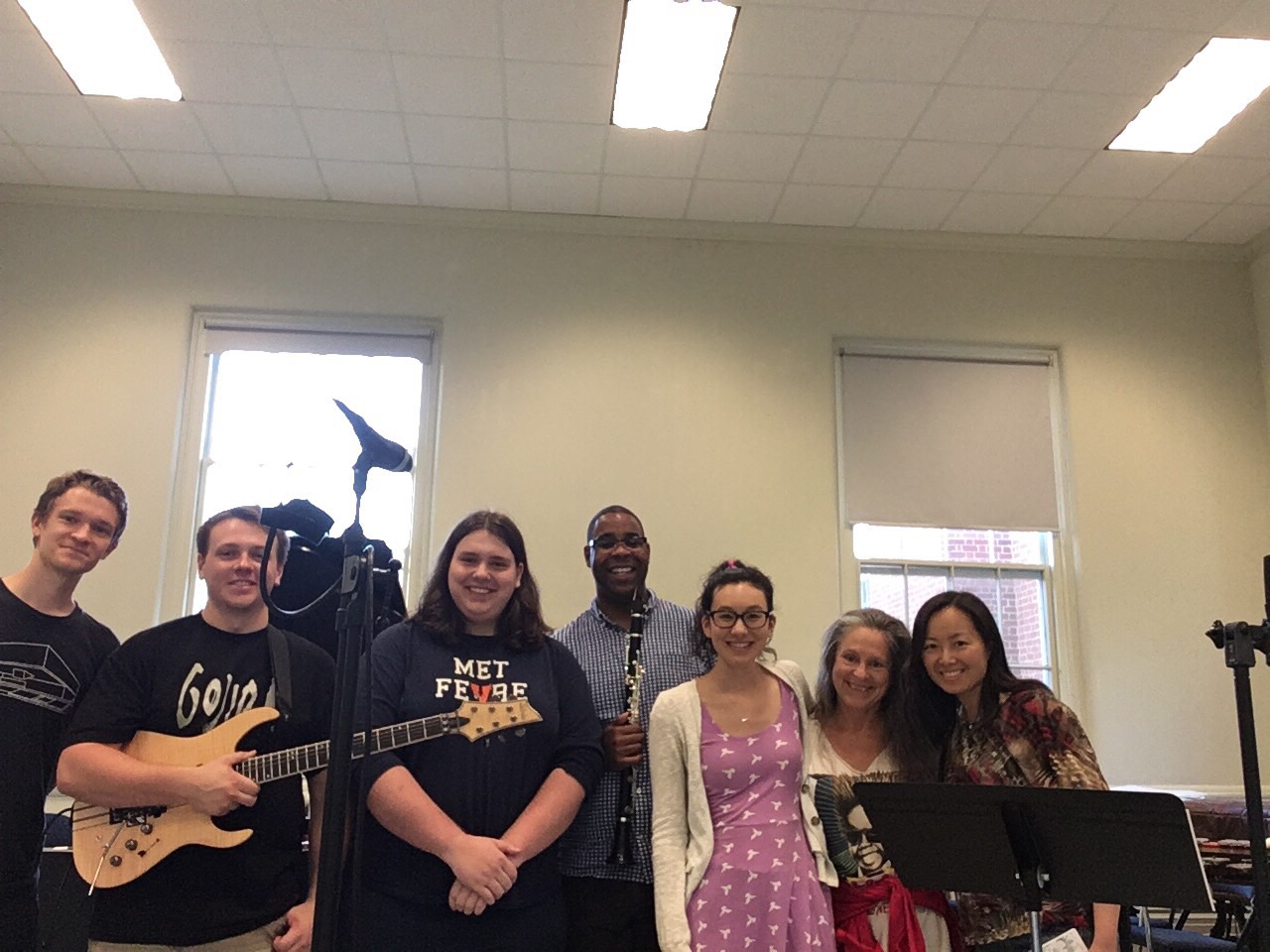
The UVA Clarinet Ensemble, that I direct, will be performing November 4th at 8pm at the Bridge Progressive Arts Space. This concert will be shared with the UVA New Music Ensemble. The Clarinet Ensemble will perform works by Khachaturian and a world premier by the Clarinet Ensmble’s resident composer, Cameron Church’s Criticaster Discourse. Ensemble members include Keerthi Radhakrishnan, Samantha Townsend, Jacob Cunningham, Ben Phillips, Sarah Zhou, Zachary Thomas, Esther Xu, Austin Cheng, and composer Cameron Church.

Free admission
For more details click here http://music.virginia.edu/night-new-music-bridge
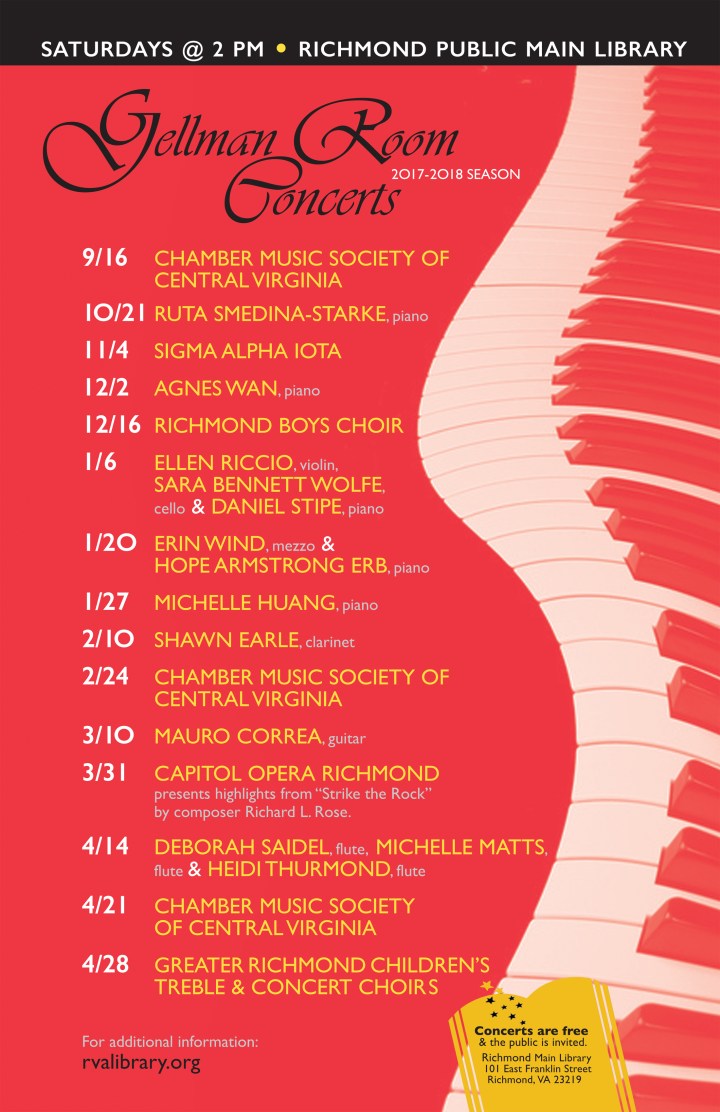
As clarinetists we often have to conquer difficult musical passages that have a lot of fast notes. This can seem like a daunting task but with determination, a plan, regular practice, and the right approach any passage can sound effortless. Here are some tips to mastering technically challenging music:

  1. The first course of action is to plan well in advance so that you have enough time to learn the music well. Panicked time crunched practice often yields poor results.
  2. Start slow! If you are making mistakes you are going too fast. Use your metronome to ensure you aren’t speeding up. Don’t be in a rush to play the passage up to tempo. My teacher in my undergrad use to say “It’s never too late for slow practice”. Slow practice allows you to learn the challenging passage without mistakes. It’s better to learn music slowly well, rather than learning it fast with a lot of mistakes.
  3. Focus on the sections you can’t do well. It’s easy to play what we can do well, but in the end the problem areas are the ones we should focus on.
  4. Distort the rhythm. If a passage is running 16th notes, practice in irregular  groups of 3, 5, 7. The emphasis will be in different places in the measure  forcing you to draw attention to different points in the passage.
  5. Play in short sections. If the difficult section is long, break it into small chunks. Master the small chucks slowly then merge the small chunks together. A chunk can be a 1 or 2 beats, a measure, or phrase.
  6. Learn the passage from back to front. Often times we want to play long sections of music which can be counter-productive to learning small chunks. If you start at the end of the passage you are forced to stop. Also working backwards allows you to learn the end well, which can often be neglected.
  7. Long-Short-Short-Short practice. If a passage has running 16th notes making one note in the grouping long helps you to focus on different parts of each beat. If the passage is in groups of 4 16th notes, practice it quarter, triplet; quarter triplet moving the quarter note to the first, second, third, and fourth notes of the grouping.
  8. Have anchors. In running 16th note passages have anchors or goal notes at key points during the passage. These are points of emphasis often at the beginning of a phrase, measure, or a high or low note in the passage. I often mark them with a tenuto or accent in parenthesis.
  9. Think of ways to make the passage more difficult than it is and practice in this way. When you play it the way it is written it will be easier.


I will be performing the Mozart Clarinet Concerto K. 622 with the Charlottesville Symphony September 23rd and 24th 2017. I’m thrilled to be performing this wonderful and important work!

My first encounter with this piece was at age 8 when I performed the second movement in the Halifax Kiwanis Music Festival. I’m really excited, many years later, to still have a relationship with this piece and to be able to play it with orchestra.

Click here for more information about tickets etc. 

No one ever seems to have a lot of time to practice, so it is essential to be as effective as possible to get the most done in the shortest amount of time. Each practice session should include time on fundamental technique, etudes, and repertoire. The fundamentals of playing clarinet include:

  1. Long tones
  2. Scales and arpeggios
  3. Articulation

Key habits for effective and efficient practice are:

  1. Put practice times in your daily schedule. Just like you schedule classes, also schedule practice time.
  2. Plan out your practicing. If you only have a half hour to practice plan that time so you are doing the fundemantals and repertoire
  3. Set goals. Since you know how long your will practice, set goals for each task. Make sure the goals are realistic for the time frame and if you don’t achieve the goal, carry it over to the next practice session.
  4. Take notes. Keep a notebook that details you practice session and your successes and challenges during each session.
  5. Don’t practice things you can play well. Focus your practice time on problem areas.
  6. Slow Practice.  Practice with a metronome to keep from playing fast. Learning difficult passages slowly and correctly will save you time.
  7. Revisit difficult passage regularly. Once you learn a difficult passage, revisit it daily to make sure it stays in your fingers.
  8. Practice smart! Remove distractions like cellphones and computers. Are you actively listening while you play or going on autopilot?
  9. Use a mirror. Practicing in front of a mirror helps you to monitor embouchure and hand position.
  10. Use your metronome and tuner.
  11. Use your metronome and tuner. (This is so important I put it twice!)
  12. Record yourself. Often times what we hear when we are playing is not the same as what others hear in the audience. Record short passages and listen back regularly to be sure that the product you are putting out is the same as what you think you hear. Even a cellphone voice recorder will work in a pinch.


The composer/performer collaborative workshop that I teach at UVA will be featured on WTJU91.1fm radio Wednesday May 3rd at 8pm EST.

This class explores composer/performer collaboration though the composition and performance of undergraduate student pieces. The show will feature works and performance by Calder Hannan, Catherine Monnes, Jack Patton-Smith, and Sarah Labriny. Tune in at 91.1fm in Charlottesville or wtju.net


Home Within is an outstanding piece by clarinetist Kinan Azmeh which expresses his emotions and frustration with the situation in his home country of Syria.  It’s a powerful work and speakers to the power of music, specifically the clarinet, as a too for political, social, and cultural action. Tom Power, the host of CBC Radio’s Q, interviewed Mr. Azmeh about the power of his art. You can listen to this interview here. I will post more about this important work in the coming days. 

I’m really excited to perform the Mozart Requiem with the Virginia Consort March, 5 2017 at 3:30pm in Old a Cabell Hall. 

I love love love this piece so much. Did I mention I love this piece. Sadly I won’t be playing basset horn but the clarinet part is still lovely. If you don’t know the Mozart Requiem (shame on you 😉) you can listen below.