I’m thrilled to share a post by Flutist Aleah Fitzwater on the benefits of multi-tracking. Her expertise on this subject and contribution is greatly appreciate and sure to improve your playing.

The Benefits of Multi-tracking Tool

Multi-tracking replicates an ensemble where you perform all of the parts. The process of creating a multi-track performance has many benefits including highlighting areas for improvement in your playing. Multi-tracking makes the following inconsistencies obvious:

  • Pitch
  • Vibrato
  • Rhythmic micro-differences

Multi-tracking has taught me a surprisingly large amount about arranging and limits. Oftentimes, the arranger/composer in me wants it all: loud low notes, long spans of running eight notes with no breaths, and percussive beatboxing. Multi-tracking has taught me to be realistic with my expectations of performers.

This short cover of “Swing Swing” by the All American Rejects is an example of multi-tracking on a woodwind instrument using the Acapella App.

If you are working with digital instruments (such as an electronic drum-set or workstation piano) in order to create a backing track, I suggest recording the instrument with a USB to lightning cable. I record my piano accompaniments to GarageBand (via the lightning cable) because it limits latency problems like other programs. If you are using a USB-compatible instrument, try starting the track in GarageBand, and then transport it to a bigger DAW (Digital Audio Workstation), like Reason or Logic. If you aren’t a pianist it is easy to layer separate parts to create a convincing grand piano backing track for the instrument of your choice.

Once I am done recording digital instruments, I import the track to Reason. My setup allows me to record my flute play through a small microphone that is attached to my headjoint. This microphone runs through a mixer, pre-amp, and interface, which then sends the sound to my computer. While Reason is an expensive production program, its reverb and other FX are much better than those in the free DAWs like Garageband.

If you want to get fancy (fancier than me) and make higher quality multi-framed, multi-track videos, try DaVinci Resolve by Blackmagic Design. This is a free video-editing program that many musicians I know use to create their videos. https://www.blackmagicdesign.com/products/davinciresolve/

Multi-tracking is not without challenges. As I mentioned earlier, I quickly discovered that my expectations were not always realistic and I learned my audience’s preferences. People seem to like the paired-down version of the multi-tracks I record, rather than complex cover projects that take hours upon hours to arrange. https://open.spotify.com/album/5fd3mlQrbyjlVfUZ1hO7sl

Multi-tracking is another great way to be creative with your instrument, especially if your local ensembles aren’t back in-person yet. Practicing with these multi-tracking tools has benefit me in more ways than I could have imagined. If you try it out for yourself, comment below and let me know how it goes! 

Shawn-Thank you so much for the featured post!

About the Author: Aleah Fitzwater is a flutist, arranger, and music blogger. You can find more of her music writing work at https://scan-score.com/https://aleahfitzwater.com/ , and https://yamahaeducatorsuite.com/authors/aleahfitzwater. In her spare time, you can find her cooking and gardening, or crafting for her Etsys!

I will be performing an online mini-concert titled “Portraits from the Southern Hemisphere” for the 2021 Canadian University Music Society Conference.

This program will feature contemporary works for solo clarinet from India, South African, and Australia. My performance will be available June 4th at 11:30am.

Game I for Lîla (1996), by Surendran Reddy 

Dying River Party (2018), by Christopher Sainsbury 

  1. Black and White Protest 
  2. Old Fella Murray Cod
  3. Dying River Party 
  4. Bindara
  5. Crying Tree 
  6. The Pooncarie Emu Dash 

Raga Music (1957), by John Mayer

  1. Vilasakhani
  2. Megha (Rainy Season)
  3. Vibhasa (Sunrise)
  4. Gunakali (Morning)
  5. Shri (Afternoon)
  6. Pilu (Evening)
  7. Puravi (End of Day)
  8. Kanada (In the deep of Night)
  9. Vasanta (Spring Raga)

There are more clarinetists than ever sharing tips and ideas about playing clarinet online (including this website). It’s truly wonderful that information about our art is so readily available and freely shared. However, because every clarinetist has individual philosophies and ideas about playing, there is a lot of conflicting information. This can be confusing for musicians looking for advice on how to improve their playing. Clarinetists navigating the large amounts of instruction online should examine all information with a critical lens to ensure the tips and ideas you are receiving are beneficial to your musical development. In the spirit of providing clarinet advice, here are few ideas when considering online clarinet resources:

  • Consider the source. Does the person providing information have a reputable career and credentials?
  • Do you like the playing of the person that is giving advice? Teachers provide their students with tools and methods that have proven to be successful for them. If you don’t like their playing, it’s best not to take their advice.
  • Test out ideas and concepts that you are curious about. From a critical point of view, try out new ideas and see if it has a positive impact on your playing. Talk to your teacher and colleagues you respect about new ideas you have discovered online.
  • Talk to your teacher about the best text, audio, and video resources on clarinet playing.
  • Always refer back to your teacher. If you don’t have a clarinet teacher, consider finding someone to teach you. They will provide a consistent approach to clarinet playing.
  • Keep an open mind. Everyone does things slightly different.
  • Let your ear guide you. If it doesn’t sound good, don’t do it!

Developing as a clarinetist, or on any instrument, demands critical thinking. There are no right or wrong ways of doing things, but methods and techniques that have been passed down throughout history, and what works best for individuals. For continued development as clarinetists we should strive to understand different approaches to clarinet playing that have worked for successful musicians and evaluate what works best individually.

Practicing tuning with a pitch drone is one of the best ways to improve your intonation. Using a tuner is also important when practicing, however a tuner provides visual cues to indicate if you are sharp or flat. In rehearsal and performance the tuner won’t be helpful and the ear will be the only guide. A drone provides an audible pitch reference which trains the ear. The best tool that I have found to use for a pitch drone is the Tonal Energy app. Tonal Energy not only includes a pitch drone function, but also a metronome, tuner, and the ability to record and analyze pitch tendencies.

The sound setting allows you to choose sounds on a wheel, guitar, or piano. I find it easiest to use the piano setting and to change the transposition to accommodate the clarinet I’m playing. Tonal Energy also allows you to select a drone sound. I prefer a sound that is rich in overtones, this helps to hear the pitch before you play it on your instrument. The saw wave and organ sound settings provide the most harmonically rich tones. Next you will need to select the temperament. I typically use just intonation rather than equal temperament. In equal temperament, not all intervals are truly in tune. For example, if you play a third in equal temperament you will hear beats. In just intonation all the intervals will be in tune. I use the equal temperament if I will be performing with piano because the piano uses this intonation. Lastly for set up, I amplify the pitch drone using an external speaker. I find the speakers in my iPhone and iPad too quiet to play with.

The best exercise for practicing intonation with a pitch drone is slow long tone octaves. I set Tonal Energy to sustain octaves on the pitches I will play. Then I will start low, move up an octave, then return to the lower octave. Before moving to the upper octave I ensure that I’m hearing in my mind the upper pitch. If there are any inconsistencies in pitch I will repeat this exercise until the pitch is accurate. If I’m having trouble hearing the pitch I’m moving to, I isolate that pitch on tonal energy and match it on my clarinet, then set octaves in the app and return to the original exercise. I play octaves chromatically ascending the full range of the clarinet ensuring each interval is in tune. This exercise can also be repeated with other intervals. The best progression is to start with perfect intervals (8ve, 5th, 4th). Once you move to non-perfect intervals you need to make adjustments for accurate intonation (i.e. major 3rd will be flat and minor 3rd will be sharp in just intonation).

There are other pitch drones that can be used, but I have found Tonal Energy to be the most useful. A free pitch drone can also be streamed on YouTube.

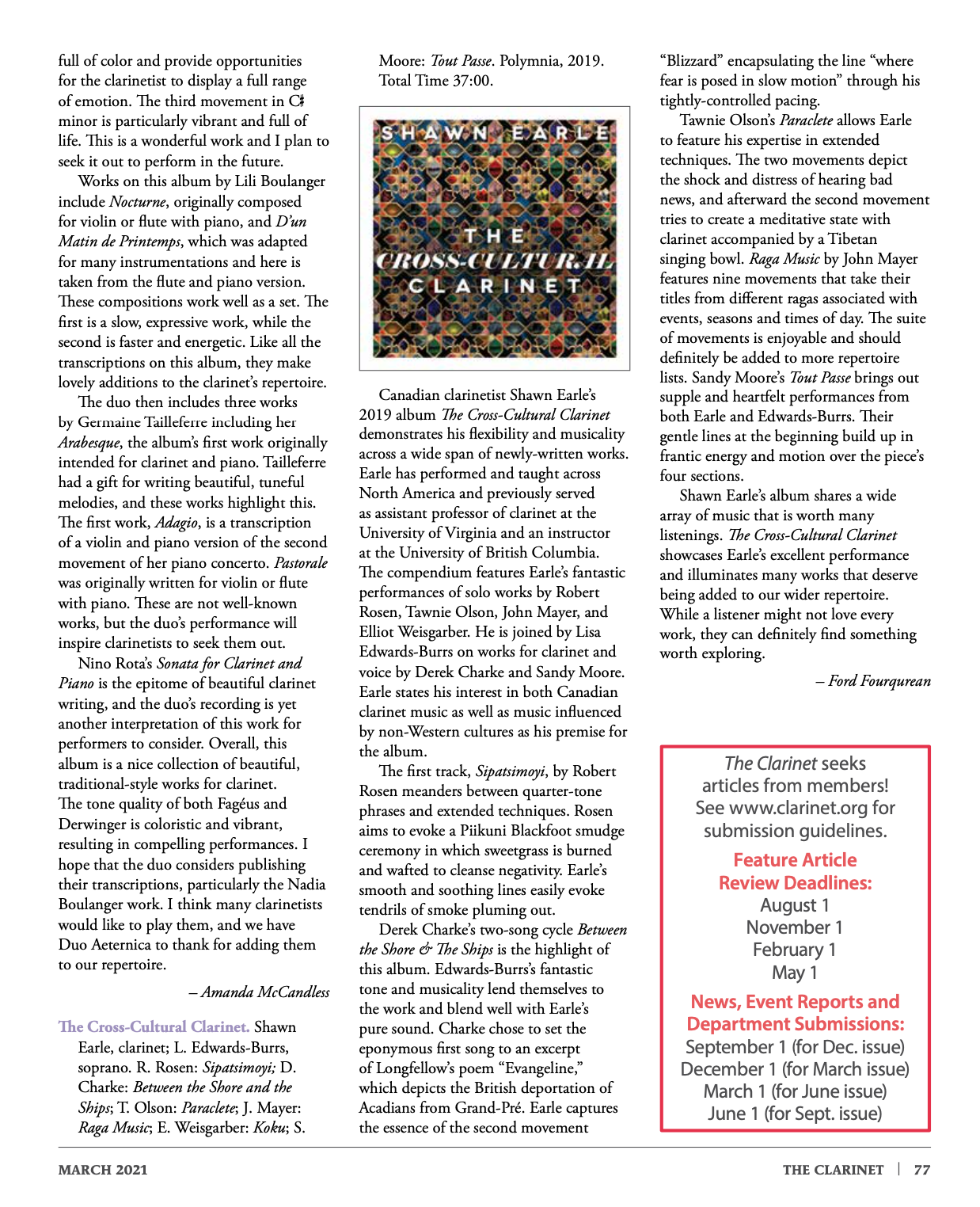
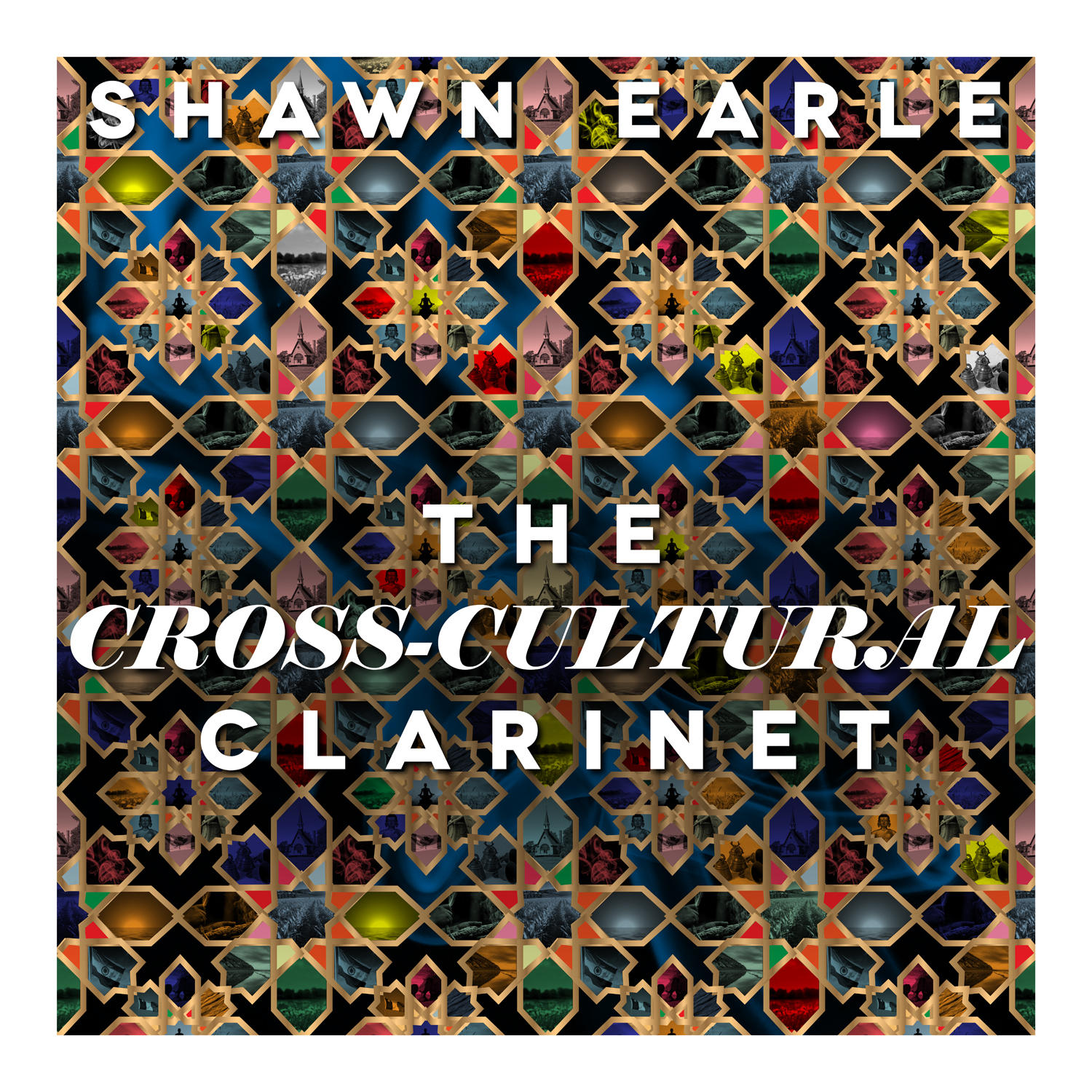
I will be releasing my first album “The Cross-Cultural Clarinet” on January 20th 2020. It will be available on all streaming services. This album features works by Tawnie Olson, John Mayer, Robert Rosen, Derek Charke, Sandy Moore, and Elliot Weisgarber. Click here to read more about this recording

The album features works influenced by different cultures. Music is a fantastic way to learn about about the world. The process of learning the pieces featured this album has not only been about learning the music, but also about cross-cultural similarities and differences.

I will be releasing my first album “The Cross-Cultural Clarinet” on January 20th 2020. It will be available on all streaming services. This album features works by Tawnie Olson, John Mayer, Robert Rosen, Derek Charke, Sandy Moore, and Elliot Weisgarber. Click here to read more about this recording

The album features works influenced by different cultures. Music is a fantastic way to learn about about the world. The process of learning the pieces featured this album has not only been about learning the music, but also about cross-cultural similarities and differences.

I will be releasing my first album “The Cross-Cultural Clarinet” on January 20th 2020. It will be available on all streaming services. This album features works by Tawnie Olson, John Mayer, Robert Rosen, Derek Charke, Sandy Moore, and Elliot Weisgarber. Also soprano, Lisa Edwards-Burrs is featured on this recording. I’m thrilled to finally be releasing this labour of love. Click here to read more about this recording

Shawn Earle-The Cross-Cultural Clarinet