I’m thrilled to announce that I will be performing a concert of contemporary Canadian clarinet works as part of the UVA Chamber Music Series. With the generous support of the UVA Faculty of Arts and Sciences, I will be joined by my colleague with whom I have collaborated with numerous times, pianist Rory Cowal. The concert will be held February, 26 2017 at 3:30 in Old Cabell Hall on the Grounds of UVA. This will be an exciting program of diverse Canadian music. For more details and tickets click here
Stay tuned for even more exciting details related to this concert. 😀
This January I will be performing the Mozart Kegelstatt Trio with Ayn Balija and Peter D’Elia. Also on the same program I will be performing Milton Barnes’ Anerca II: The Raven and the Children with Ibby Roberts. The concert is January 28th at 8pm in Old Cabell Hall on the Grounds of the University of Virginia. More details available here.
The difference between a good and a bad reed can make or break a performance. Also a good reed can help you progress confidently while a bad reed can hold you back. Therefore, it’s important to take great care when selecting reeds. Frequently, I ask students about their reed selection process and they explain that they select one reed from a box and play on it. This process is a gamble for a number of reasons. If a single reed is selected there is the possibility that it could be outstanding or poorly matched to your set-up leading to squeaks and poor tone. Each clarinetist has a different instrument, mouthpiece, and facial structure which means a reed that works well for one person might not for another. Given the variables involved, in any box of reeds there is a variety. For example, in a box of 3.5 strength reeds there will be reeds closer to 4 and 3. This fact makes it essential for clarinetists to try all the reeds in the box to see which are a fit. Selecting a reed is like buying a pair of shoes. It is essential to find a shoe that is comfortable; the same idea holds true with reed selection.
Reeds should be purchased in at least quantities of ten. Most boxes of reeds come with ten reeds. Having more reeds increases the number of good reeds that you will get from a box. A good reed has a variety of characteristics:
A clear focused dark tone is the primary quality with a sound free of fuzz and buzz.
A reed that has an ease of playing. Balance should be achieved between free blowing and resistance. Too much resistance will create a fuzzy tone while a free blowing free will be bright and unfocused. Between these two extremes is a reed that offers ease of playing while maintaining enough resistance to blow against and hold tone.
Ease of articulation response is essential as well. A more resistant reed will articulate slowly while a free blowing reed will be difficult to control. Again, when selecting reeds you should seek a balance between these two variables.
A good reed should allow you to play in all registers with a matched even tone. If the tone is fuzzy in the chalumeau register and strident in the altissimo, it is not a good fit.
I begin my reed selection process by taking all the reeds in the box out of the package and their individual wrappers. On each reed I play a scale the full range of the instrument (F major 3 octaves) and a line of an articulation study (Langenus 11). Through this process I am able to assess the tone across all registers, resistance, and articulation.
If the reed sounds good and articulates well I add it to a “YES” pile.
If it’s a little fuzzy or light but has an overall good tone I add it to a “MAYBE” pile.
If the sound is really fuzzy or bright with a bad tone I add it to the “NO” pile.
Date your reeds
I complete this process for all the reeds in the box. At the end I usually have 3 or 4 YES reeds. These reeds I date and put in my reed case. Adding the date on the reed allows me to project the life cycle of the reed and not mix up older reeds.
I will complete this process again with reeds in the MAYBE pile and determine if any are worth practicing on. The reeds in the NO pile are composted right away. Life is too short to play on bad reeds!!!
Reed storage is key to their longevity. After initially testing reeds, the plastic holders they are packaged in should be
Recycle these do not Reuse
placed in plastic recycling. These holders do not keep the reed flat. Reeds not places on a stable flat surface will warp. There are a variety of reed storage devices which boast particular features. However, it is most essential to keep the reed flat and protect the tip.
Repeating this reed selection process weekly or bi-weekly (depending on the amount of playing you do) will ensure that you have the best reeds for your instrument set-up.
ReedBuzz is an outstanding website managed by the International Clarinet Association. It provides brief articles and tips on various aspects of playing clarinet. Check it out! There is a wealth of great information on this site.
I will be performing October 16th with EcoSono in Washington DC. We will be performing The Ceiling Floats Away with music by Matthew Burtner and Poetry by Rita Dove. This is a beautiful work with includes interactive electronics.
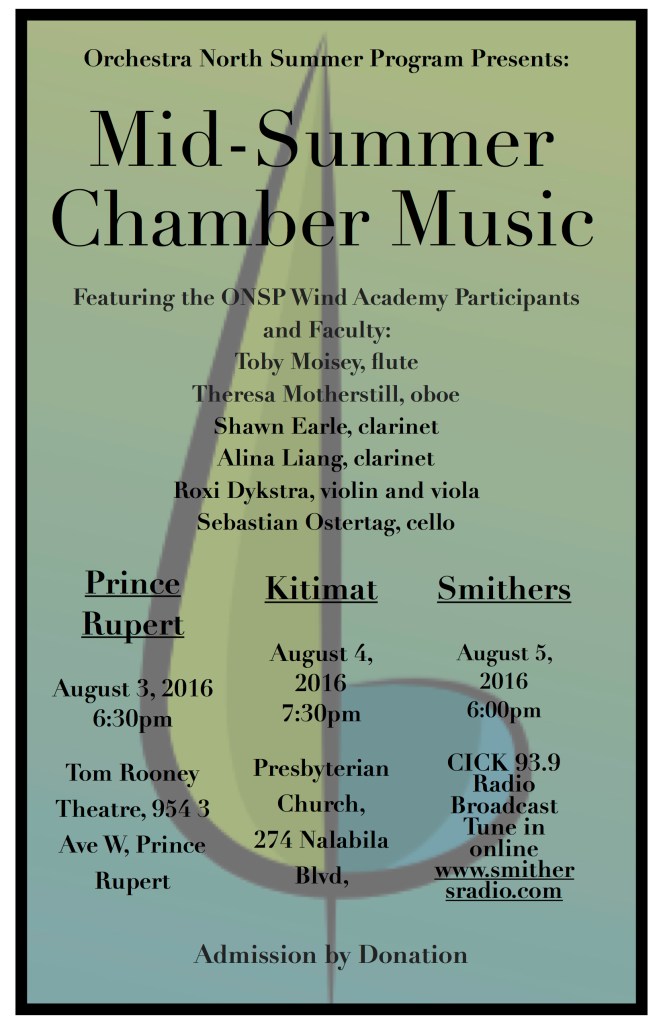
I will coordinating the wind program for the Orchestra North Summer Program in Smithers, British Columbia this August. This will be an exciting two weeks of music making. The first week will be a the wind academy program which will feature a wind chamber music tour of Kitimat, Prince George, and Terrace. The second week will be a community program. I will be performing on the wind academy tour and in the faculty wind quintet. Click here for more information about Orchestra North.
The Farrelly Ensemble is an international trio featuring Australian flutist Michal Rosiak, Canadian clarinetist Shawn Earle, and American cellist Maureen Kelly. The Farrelly Ensemble is thrilled to be artists-in-residence at Bundanon Trust from June 15-29 2016 and will be featured in the Unbound Flute Festival in Brisbane July 1st 2016. The Farrelly Ensemble is committed to cross-cultural learning through the exploration of music from of their respective countries. Their 2016 program will include two new commissions by Australian composer Stephen Cronin, American composer Greg Bartholomew, and Canadian composer Omar Daniel’s Dreams of the Panther.
The Albemarle Ensemble will be playing a concert in Culpeper, VA May 22. We will be playing works by Beethoven, Rossini, Barthe, Auric, Piazzolla and more. More details to come.
Albemarle Ensemble at our April 25th Concert at UVA.
The Chamber Music Society of Lincoln Centre will be live streaming a concert Thursday, March 10th at 8:30pm EST. The concert titled “Late Night Rose” will feature the Saint-Saën Clarinet Sonata Op. 167 and the Khachaturian Trio for Clarinet, Violin, and Piano performed by clarinetist Tommasi Lonquich.
To live stream this concert follow the link below:
I will be joining the Virginia Consort to performer John Rutter’s Requiem March 6th at 3:30pm in Old Caball Hall at UVA. I’m thrilled to be invited and have perform Rutter for the first time!





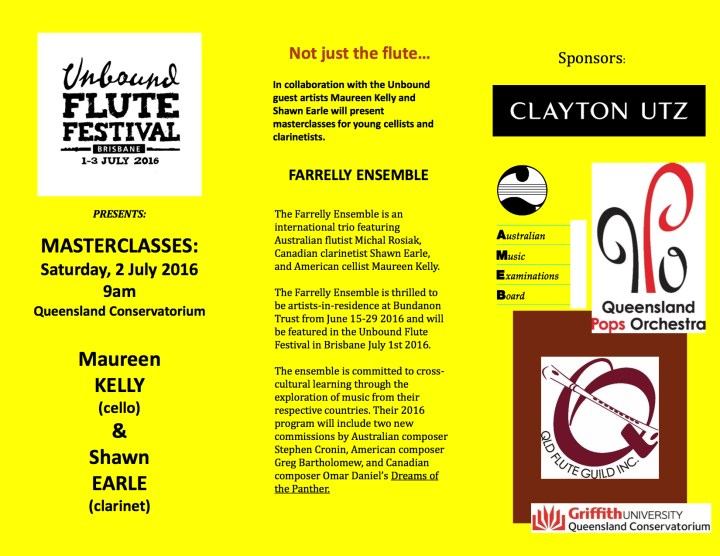
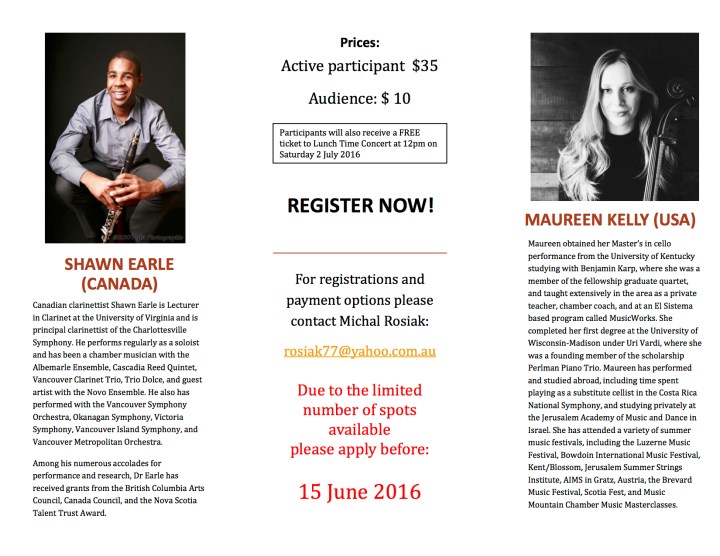
 5-29 2016 and will be featured in the Unbound Flute Festival in Brisbane July 1st 2016. The Farrelly Ensemble is committed to cross-cultural learning through the exploration of music from of their respective countries. Their 2016 program will include two new commissions by Australian composer Stephen Cronin, American composer Greg Bartholomew, and Canadian composer Omar Daniel’s Dreams of the Panther.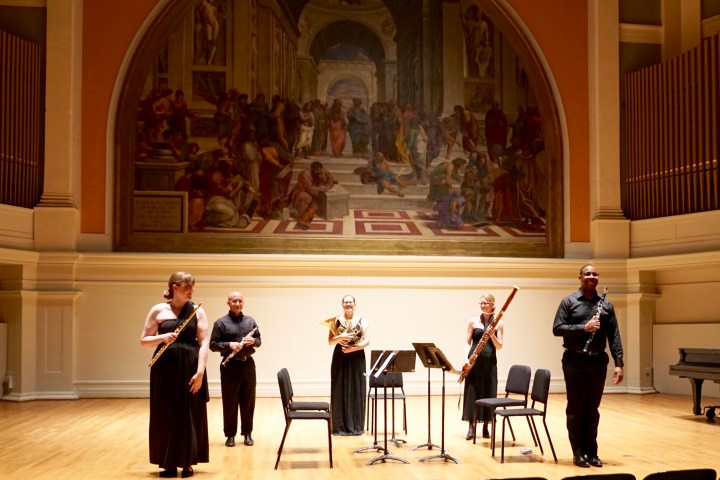
 Shawn Earle